Stop drowning in meetings

Photo by Cristian Palmer on Unsplash
There’s a short internal memo from Elon Musk that keeps surfacing inside teams (you can still find the original note recirculated on outlets like The Verge).
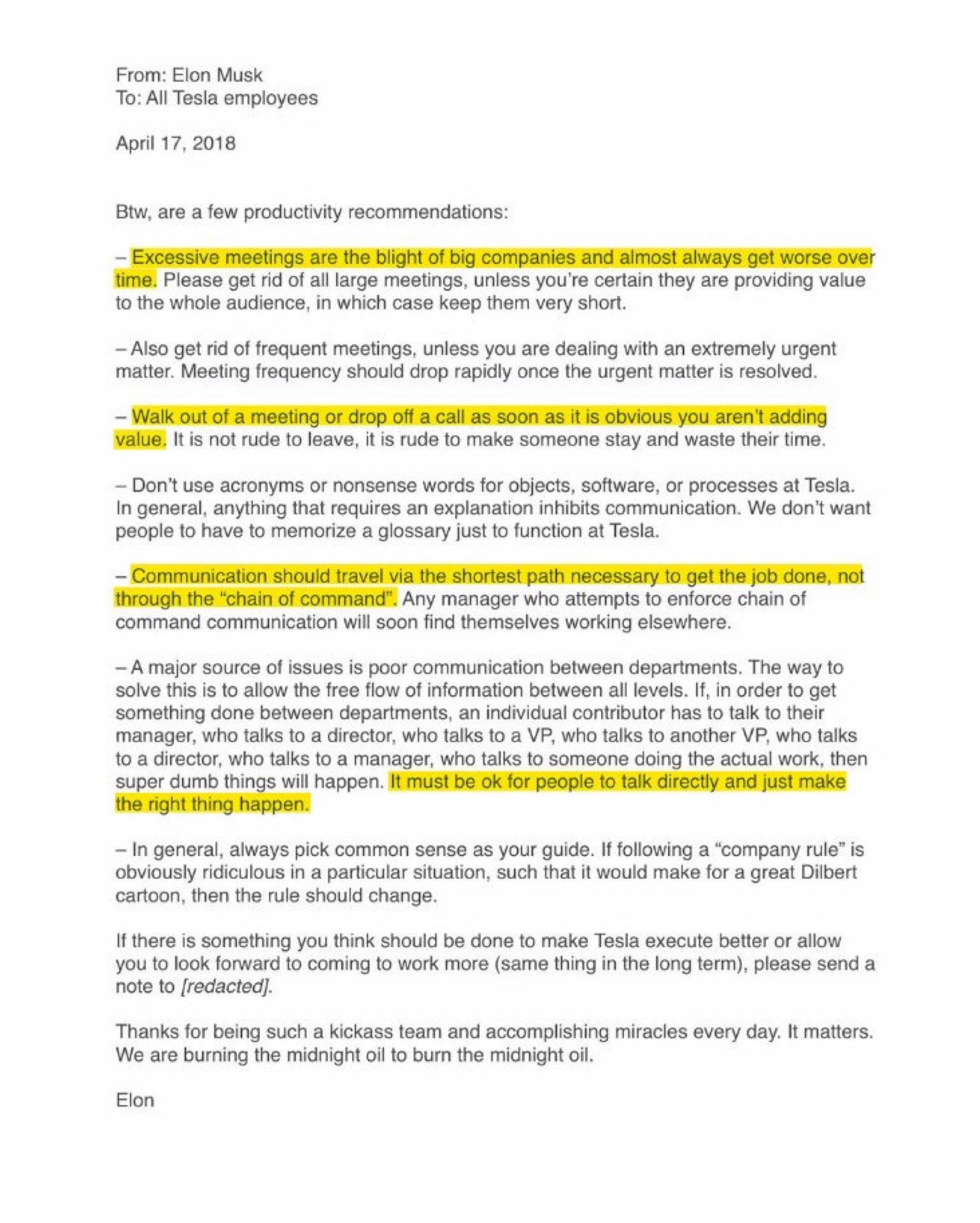
Screenshot of the Elon Musk memo
It’s not because it’s complicated.
It just says the obvious things everyone already knows and no-one says out loud:
- big meetings are usually a waste to time
- recurring meetings multiply for no reason
- if you’re not adding value, leave
- jargon slows everything down
- chain-of-command comms kill momentum
So here’s a long-form, no-spin take on those ideas: how to apply them in an agency that is trying to scale without collapsing under its own calendar.
1) Meeting bloat isn’t a scheduling issue. It’s a leadership one.
Most teams don’t have a “time management” problem. They’ve got a decision design problem.
When ownership is fuzzy and priorities are vague, meetings become the default container for uncertainty, risk-sharing, and “alignment”.
Before long, the calendar is running the company.
Meeting bloat in the wild
- 60 minutes booked for something that needs 12
- 14 attendees “just in case”
- a weekly slot that no one can explain, but no one cancels
- status updates delivered live even though nobody asks any questions
It’s not that people love meetings. They just feel safer than making calls.
The standard I use
If a meeting can’t do at least one of these things, it’s a candidate for the bin:
- Make a decision
- Unblock work
- Resolve a real disagreement
- Reduce risk in a specific way (not “general visibility”)
If it’s just information sharing, the fix isn’t another meeting. It’s a better update mechanism.
The boring fix
- default to 15/30 minute blocks, not 60
- limit attendance unless someone clearly adds value
- cancel the ones that aren’t genuinely useful to the whole group
- require an agenda that spells out decision required, input needed, owner, next steps
Yes, some people will hate the new structure. That’s usually a sign you’re hitting the right meetings.
2) Leaving a meeting isn’t rude. Keeping people hostage is.
People nod when you talk about this… and then never do it.
Why? Because leaving a meeting feels like career risk.
But if you’re in a room just to “be seen”, you’re not helping. You’re just being available.
Leaving means the right people are driving the decision, everyone else gets time back, and the team is trusted to manage their attention.
If leaving feels unsafe, the problem isn’t etiquette. It’s fear.
3) Recurring meetings survive because they comfort people, not because they work.
Recurring meetings are emotional support disguised as governance.
You can tell by the signs:
- no one remembers the last time it changed a plan
- people deliver updates, not decisions
- the same issues resurface every week with no owner
- it runs even when nothing is happening
Replace calendar-driven governance with trigger-based governance:
- a deadline is at risk
- scope changes
- a decision is blocked for more than 24 hours
- a dependency is unresolved by end of day
- a client is escalating
If you still want a rhythm, fine. Just don’t confuse it with progress.
4) Chain-of-command communication is a delivery killer.
Delivery slows down because the path looks like:
Contributor → Manager → Director → back down again
That’s a relay race, not effective for communication.
Every handoff adds delays and opportunities to misunderstand the work.
The short path between problem and solution is two people talking directly — not five people forwarding messages “for visibility”.
If your org chart becomes your comms system, don’t be surprised when everything takes ages.
5) Acronyms and jargon are a tax on clarity.
Acronyms feel efficient, but they really aren’t.
They slow onboarding, stop people asking questions, and make smart people pretend they understand.
Once questioning stops, guessing begins. Guessing is where rework lives.
My standard
If a new starter can’t understand it in week one, rewrite it.
Plain English is not a writing preference. It is a critical operational one.
Jargon often shows up when someone doesn’t want to be pinned down. Simplifying comms removes these hiding places.
6) The Dilbert test: if the rule would make a good cartoon, change the rule.
- “We need three approvals to change a label”
- “We can’t speak to the client without going through X”
- “Log time to the minute even though nobody uses it”
- “Wait for the weekly meeting to make a decision”
Rules built to protect the organisation often limit it instead.
If the process only works when everyone follows it blindly (lacking common sense), it’s not “mature”. It’s just hard work in a silly hat.
7) My Day One playbook: stop the bleeding first.
When I land in a messy delivery environment, I don’t start with a new tool. I start with time.
Because when teams are drowning, you don’t need a transformation roadmap. You need room to breathe.
Day one rules
- Cancel meetings without decisions (make them async)
- Cut recurring meetings back to triggers
- Reduce attendee lists
- Install a “leave the meeting” norm (if your team are made to feel safe enough to do it)
- Shorten comms paths (fewer relays)
- Kill unnecessary jargon
This is the only way you’re going to create the breathing room for anything else to work.
The point
This isn’t anti-meetings. It’s anti-waste.
Calendar chaos isn’t caused by a lack of tools. It’s caused by unclear ownership, slow decisions, and a culture that confuses attendance with contribution.
If your calendar is full and delivery still feels chaotic, that’s not “just how it is”. That’s the system doing what it has been allowed to do.
It can change quickly once you stop treating meetings like sacred objects.