Cheltenham Festival 2026 and the invisible work that holds big events together
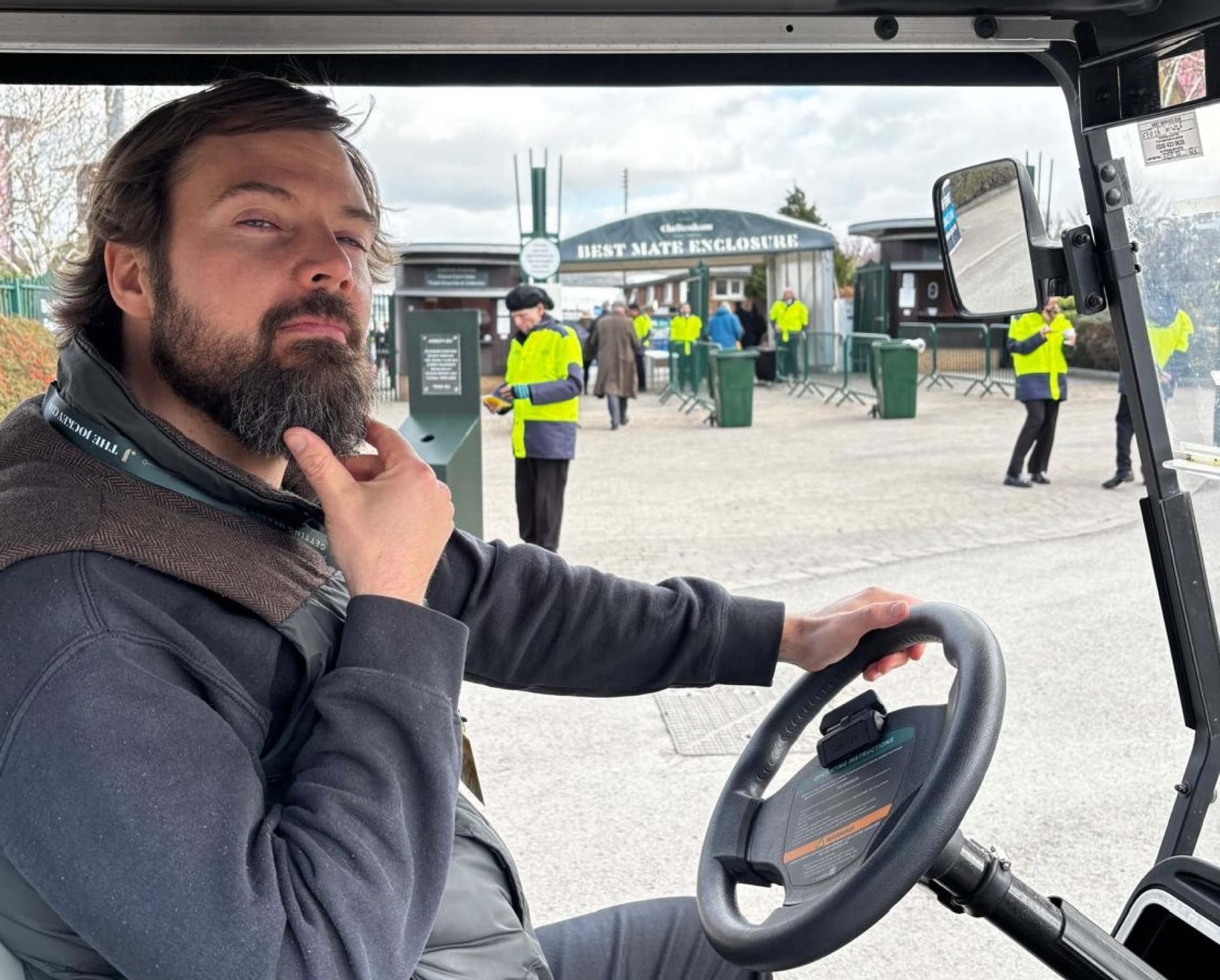
Last week, I worked at Cheltenham Festival as part of the events team. My role was fairly simple: I drove the shuttle bus for stable staff between the stables and their accommodation, helped with check-ins, and made sure that small corner of the operation kept moving over seven days of 12-hour shifts.
It wasn’t the glamorous end of the event. I wasn’t anywhere near the public-facing spectacle most people associate with Cheltenham. I wasn’t involved in race-day theatre, hospitality, or any of the visual side of it that people photograph and remember. Most of my week was made up of repetitive journeys, practical conversations, and the sort of work that disappears into the background when it’s done properly.
That is exactly why it stayed with me.
Because when you spend a week inside an event of that size, even in one narrow role, you get a close look at what actually holds something together. From the outside, Cheltenham Festival looks like atmosphere and occasion: crowds, horses, money, excitement, long lunches, high emotion, and all the obvious energy that comes with a major live event. From the inside, it is also a huge operational machine. Transport, accommodation, security, event control, logistics, communications, welfare, access, timing, escalation. An enormous amount is happening at once, and most of it has to happen without drawing attention to itself.
That contrast is what I found most interesting. The visible event matters, obviously. It is the reason everyone is there. But the visible event only works because of the invisible one running underneath it.
Most people only notice operations when something fails
Operational work has a strange problem: when it is done well, it barely gets noticed.
Nobody comments on transport when it runs smoothly. Nobody thinks much about check-ins if they happen without friction. Nobody notices clear escalation routes or decent radio protocols unless they have experienced the opposite somewhere else. The more seamless the experience is, the easier it is to assume that it all just sort of happened.
It didn’t.
One of the things that stood out to me at Cheltenham was how much had been thought through in advance. There was a proper staff handbook. Radio use was clearly explained. Different codes were set out. People had clear points of contact. There was a structure to how issues were raised and handled. That might not sound particularly interesting written down, but in practice it changes the feel of the whole environment.
When something went wrong, it could be dealt with quickly and quietly. Not because people were unusually heroic, but because there was already a shared understanding of what to do next.
At one point, I saw a driver, furious about a road closure, drive his car into a traffic marshal. It was the kind of incident that could very easily have created panic, confusion, or a lot of people getting in each other’s way. Instead, within seconds, the response was there. Police were involved immediately. People moved into the roles they needed to play. The call came through on the radio and everyone seemed to know what to do.
That, to me, is one of the clearest signs of a well-run operation. Not that nothing goes wrong, because that is never realistic, especially in a live environment with this many moving parts. It is that when things do go wrong, they do not immediately create confusion. People know the process. They know who owns what. They know where to escalate something. They know how to respond without turning a small issue into a larger one.
That kind of clarity is easy to underestimate until you spend time somewhere that has it.
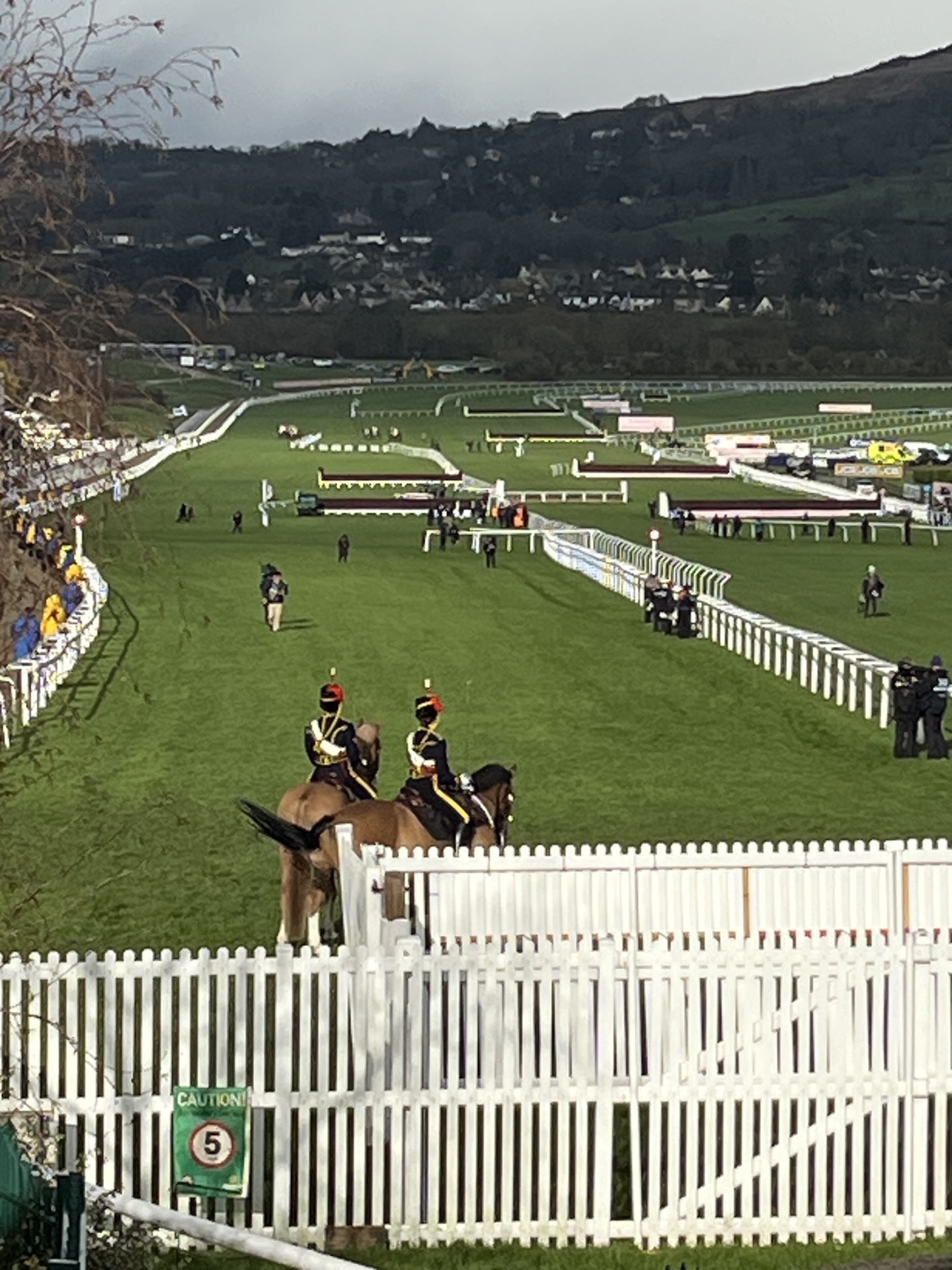
View of the finsh line
Scale only works when small jobs are done properly
One of the easiest mistakes to make when looking at a major event is to focus only on scale. Scale is impressive. Thousands of people, multiple teams, live logistics, emotional highs and lows, safety considerations, timing pressures, public scrutiny. That is the obvious part.
What is less obvious is that scale is only manageable when the smaller jobs inside it are taken seriously.
My own role is a good example of that. On paper, driving stable staff back and forth between accommodation and the stables is not especially interesting. It is repetitive, narrow, and far from the centre of attention. But if that part is poorly handled, the knock-on effects do not stay neatly contained. Delays begin to ripple. Frustration builds. Communication gets messier. Basic trust in the operation starts to weaken.
Even within that narrow role, there were moments where I had to adapt. If another driver was unavailable, I sometimes needed to change my route or cover more ground than expected. But what made that manageable was that I understood the parameters I was working within. I knew, for example, where I could and could not go, which rules were fixed, and where there was room for judgement. I could not use the bus lane, but I could take an alternative route if needed.
That matters more than people think. Good operations are not rigid because they leave no room for judgement. They work because people understand the boundaries clearly enough to make sensible decisions inside them.
That is true well beyond events. In any system, people tend to underrate the work that looks ordinary. They pay more attention to the visible moment, the standout performance, the part with status attached to it. But the standard of an operation usually lives elsewhere. It lives in handovers, response times, instructions, coordination, and whether the so-called boring bits are actually dependable.
There is nothing glamorous about that. But there is also no serious operation that can function without it.
Calm is usually the result of preparation
A lot of people mistake pressure for chaos.
They assume that if something is busy, large, or high-stakes, it will naturally feel frantic. They almost treat confusion as evidence that something important is happening. In reality, the best-run environments often feel calmer than you expect precisely because they have been designed properly.
That was one of my main takeaways from the week. Cheltenham Festival is not a low-pressure setting. There is too much happening, and too many people relying on one another, for that to be true. But despite that, it did not feel like an operation built on improvisation. It felt structured. The planning had been done upfront. Expectations were clear. The communication framework was already in place.
That matters because pressure is hard enough on its own. What makes work unnecessarily draining is ambiguity.
Ambiguity about who is responsible.
Ambiguity about what to do next.
Ambiguity about how to raise an issue.
Ambiguity about what standard is expected.
A lot of stress that gets blamed on workload is actually caused by that sort of uncertainty. The tasks may still be demanding, the hours may still be long, but the experience of the work changes when the environment makes sense. You spend less energy deciphering the system and more energy doing the job.
That is a lesson a lot of teams could do with learning. Too often, organisations talk about resilience when what they really mean is people coping with preventable mess. Those are not the same thing. A resilient team is not one that survives confusion every week. It is one that has enough clarity around it that pressure remains manageable.
Good operations are flexible because they are clear
One thing the week reinforced for me is that flexibility is often misunderstood.
A lot of people use it to mean making things up as you go. In practice, that usually just means pushing uncertainty down onto the people doing the work. Real flexibility looks different. It comes from having enough structure in place that people can adapt without losing the plot.
That was true even in small moments. Routes changed. Availability changed. Demand changed. Not every day played out exactly as expected. But because the basic rules were clear, those adjustments felt workable rather than stressful.
That is what good systems do. They create enough order that variation can be absorbed without everything becoming unstable.
It is a point worth making because many teams swing too far in one of two directions. Either they over-engineer everything and leave no room for judgement, or they under-prepare and then pretend constant improvisation is a strength. Neither is especially effective. The sweet spot is clarity with discretion: clear constraints, clear standards, and enough trust for people to adapt within them.
That is a much stronger model than either rigidity or chaos.
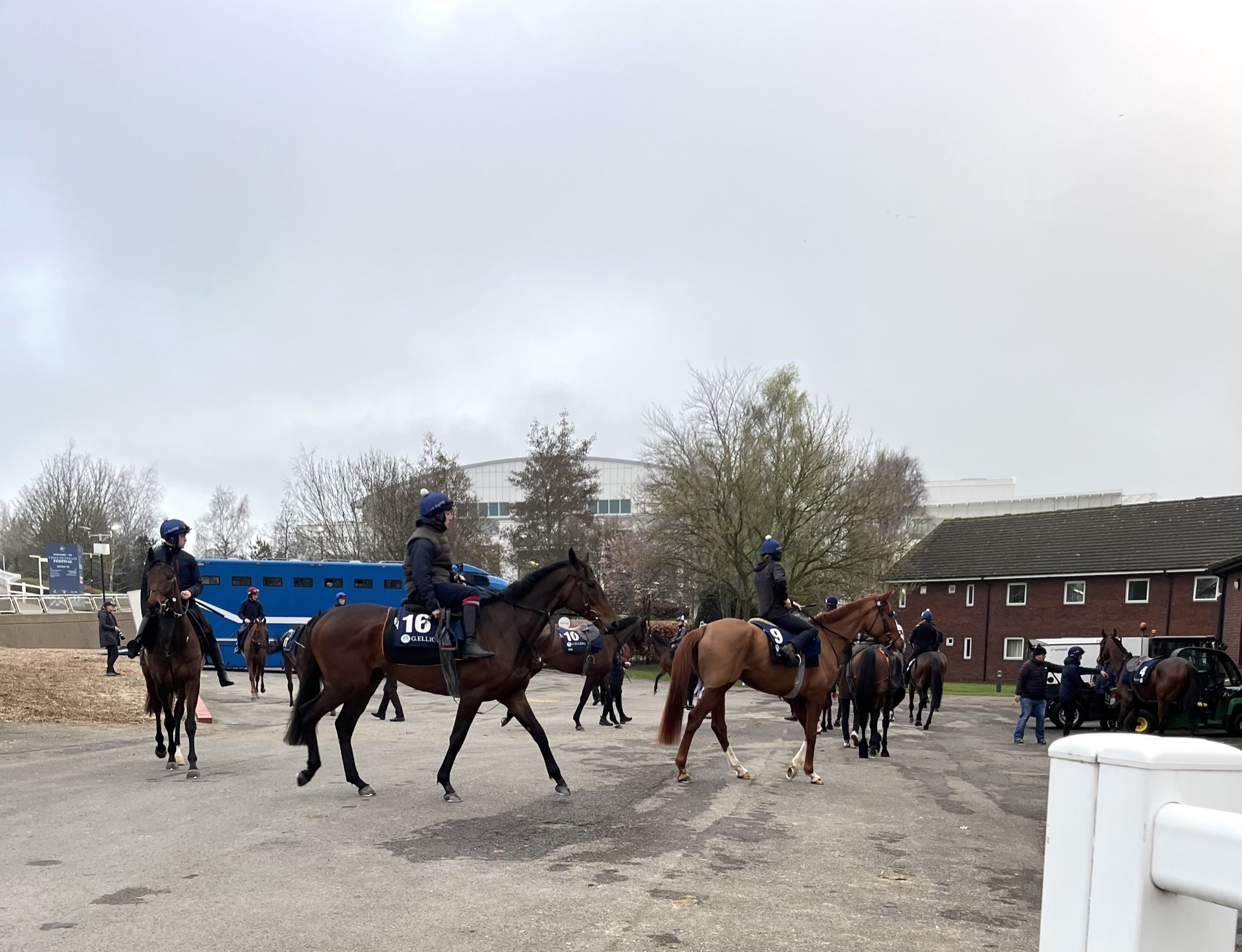
Horses on their morning walk
Good operations support the people doing the work
Another thing I came away from the week thinking about was how much operational quality affects morale.
Seven days of 12-hour shifts is a long week by any standard. The work was tiring. It was repetitive. No one was there pretending otherwise. But even so, the overall feeling among the people working the event was positive. People seemed committed. They got on with what needed doing. There was a sense that everyone was contributing to something worthwhile, even if their own piece of it was small.
Part of that came down to something simple but important: when there was downtime, people helped each other out. If someone had a quiet patch, they did not just sit around guarding their own lane. They found ways to be useful. That might have meant running the vacuum round the accommodation lobby while waiting for the next lift request, or tidying the stockroom to help the kitchen staff. Small things, but telling ones.
That kind of behaviour does not come from a team talk about culture. It usually comes from the environment itself. When people feel part of a functioning operation, and when roles are clear enough that they are not constantly firefighting their own mess, they are much more likely to look sideways and help someone else.
I do not think that happens by accident.
People are much more willing to work hard when the environment feels coherent. When communication is clear, support exists, and problems are handled sensibly, effort feels like effort in service of something. When those things are missing, even straightforward work starts to feel heavier than it should. Friction builds quickly. Small frustrations become personal. People start blaming each other for gaps that are really structural.
That is why I think good operations are often misunderstood as purely functional. They are not just about efficiency. They are not just about keeping things moving. They shape the emotional quality of the work as well.
A well-run operation protects the attendee or customer experience, but it also protects the people delivering it. It gives them a clearer shot at doing good work without being worn down by unnecessary disorder. That is not a soft benefit. It is part of performance.
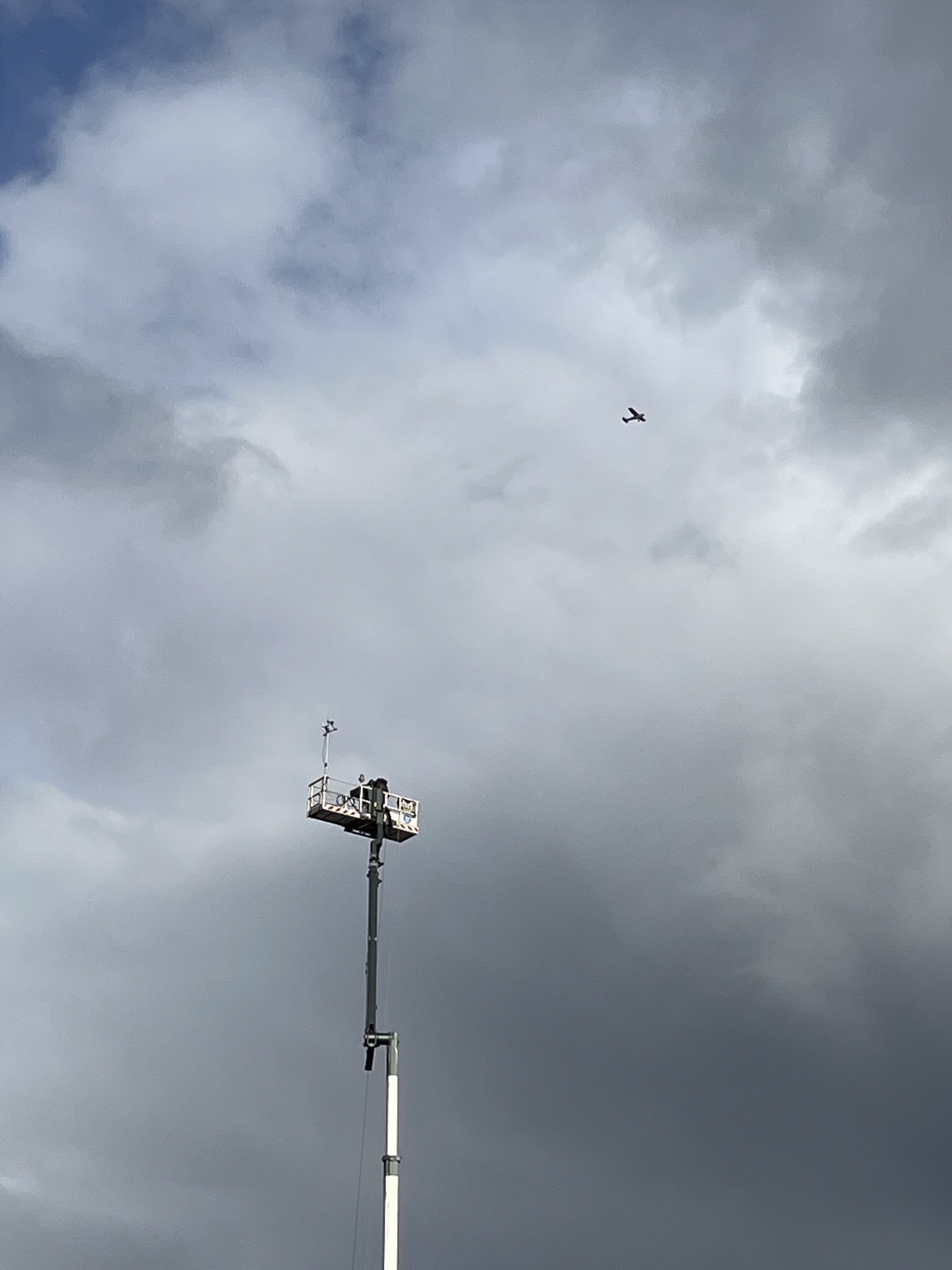
Camera guy on a cherry picker
Strong operations learn in real time
One of the more reassuring parts of the week was that the operation did not just rely on a plan and hope for the best. Each day ended with a debrief session where relevant team members could talk through what had happened and what needed adjusting.
That matters.
A lot of teams treat planning as a one-off exercise. They prepare at the start, then spend the rest of the time either sticking too rigidly to the original plan or drifting away from it without much reflection. Debriefs are what stop that happening. They create space to notice patterns, solve recurring issues, and make tomorrow easier than today.
That is another reason the event felt well run. It was not just organised. It was responsive. Problems were not only dealt with in the moment; they were discussed afterwards so the team could tighten things up going forward.
That habit is useful in any environment. A team that never stops to examine how the day actually went will keep paying the same operational tax over and over again. A team that builds in review points has a chance to improve while the work is still live.
You do not need a major crisis to justify that. Small frictions are enough. In fact, those are usually the things worth paying attention to, because they tell you where the system is leaking energy.
The real standard sits below the surface
The more I thought about Cheltenham afterwards, the more I kept coming back to the same point: most people judge success by what they can see, but the real standard usually sits below the surface.
They see a big event that ran well.
They do not see the systems that helped it run well.
They see the end result.
They do not see the repeated, unflashy work that made the end result possible.
That is true in events, and it is true in business more broadly. Teams often want the visible signs of excellence without committing to the less visible disciplines that create it. They want smooth delivery without proper handovers. They want consistency without process. They want calm under pressure without clarity before pressure arrives.
It does not work like that.
What holds things together is rarely dramatic. It is usually a combination of planning, communication, role clarity, and people taking their responsibilities seriously even when those responsibilities do not look impressive from the outside.
That was my view from one small part of the Cheltenham machine. I was not there to oversee the whole thing, and I am not pretending that one week in one role reveals every truth about large-scale operations. But it was enough to make one point very clearly.
Big things do not come together because of one heroic effort at the centre.
They come together because a lot of people do small jobs well, because they know how to respond when something changes, and because someone cared enough to make those jobs workable in the first place.